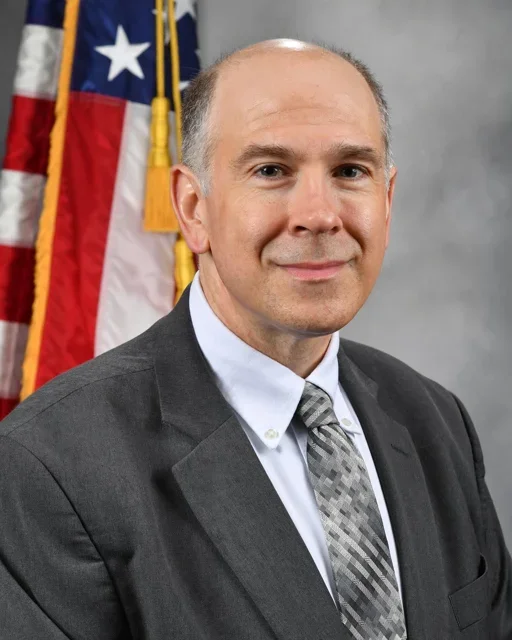
Our Team
Kate Gilbert
Kate Gilbert founded Partnership for Public Accountability to equip state and local prosecutors with the investigative, legal, and strategic support needed to hold government officials accountable for abuses of power.
Kate spent over a decade as a career prosecutor in the Justice Department’s Civil Rights Division. As a trial attorney and special litigation counsel in the Criminal Section, she led complex criminal civil rights investigations and obtained convictions in cases involving police misconduct, corrections misconduct, official sexual misconduct, obstruction, and hate crimes. She tried over a dozen cases to verdict. Her notable prosecutions include the excessive force and obstruction conspiracy case stemming from the fatal police beating of Tyre Nichols in Memphis, Tennessee; the sexual assault and obstruction case stemming from a parole officer’s serial sexual assaults of parolee-victims; and a four-defendant deliberate indifference and obstruction case arising from the fatal denial of medical care by federal correctional officials.
As acting deputy chief and legal counsel, Kate shaped her office’s legal positions, oversaw its legal research and writing, advised Department components on criminal and civil rights policy and constitutional appellate matters, and supervised the unit’s Cold Case and Legal Research Unit. Kate is a nationally recognized trainer who has developed and delivered dozens of trainings to federal, state, and local prosecutors and law enforcement nationwide, including instructing FBI agents and Assistant U.S. Attorneys on law enforcement misconduct at the DOJ’s National Advocacy Center. Earlier in her career, she prosecuted misdemeanor domestic violence cases in District of Columbia Superior Court and litigated systemic civil cases in the Civil Rights Division’s Disability Rights Section.
Before joining the Justice Department through the Attorney General’s Honors Program, Kate clerked for Judge Paul J. Watford on the U.S. Court of Appeals for the Ninth Circuit and Judge Robert Sack on the U.S. Court of Appeals for the Second Circuit. She earned her J.D., magna cum laude, from the University of Michigan Law School, where she was inducted into the Order of the Coif and received the Henry M. Bates Award, the law school’s highest honor; a master’s degree in human rights, with merit, from the London School of Economics; and a B.A., cum laude, from Dartmouth College. Her writing has appeared in the Department of Justice Journal of Law and Practice, Michigan Law Review, Lawfare, and the New York Times.
Prior to law school, Kate spent five years working for and helping to manage nonprofit organizations.
Kate lives with her family in Washington, D.C., where she remains a proud Forever Wisconsinite and Green Bay Packer Backer.

Paige M. Fitzgerald
Paige M. Fitzgerald works alongside state and local prosecutors to develop investigations and advance prosecutions involving official misconduct under color of law and public corruption, providing training, counsel, and strategic resources to assist local officials in bringing these cases.
Paige brings more than three decades of prosecutorial and executive leadership experience at the state and federal levels, having tried more than 50 felony jury trials. Before joining the Department of Justice, she spent five years as a Deputy District Attorney in Riverside, California, where she prosecuted murder, sexual assault, domestic violence, and police misconduct cases, and was a founding member of the office’s Officer-Involved Misconduct Unit.
Paige then served for 26 years in the Criminal Section of the DOJ’s Civil Rights Division, including 10 years as its Principal Deputy Chief. She often served as Acting Chief and was selected for the Senior Executive Service. Leading a staff of more than 100 attorneys, investigators, and professionals, she set national prosecution priorities, built coalitions with state and local law enforcement and civil rights organizations, and spearheaded the Section’s expansion into prosecuting sexual assaults by law enforcement officers.
Throughout her DOJ tenure, Paige litigated and supervised some of the nation’s most consequential civil rights cases. As the founding member and longtime supervisor of the Department’s Cold Case Unit, she personally prosecuted the only two federal civil rights-era cold case murder prosecutions brought by DOJ. She also prosecuted a Mississippi police officer for raping an arrestee, Atlanta police officers for falsifying a no-knock search warrant that led to the fatal shooting of an innocent grandmother, and investigated and helped draft DOJ’s investigative report on the shooting of Michael Brown in Ferguson, Missouri... As Principal Deputy Chief, she supervised all litigation across the Section, including high-profile prosecutions such as the federal prosecutions arising from the fatal shooting of Walter Scott by a South Carolina police officer, the racially motivated fatal shooting of Ahmaud Arbery by two Georgia men, and the prosecution of four Minneapolis police officers for their roles in the killing of George Floyd, She sat on DOJ’s Domestic Terrorism Executive Committee, and was an acclaimed instructor at the National Advocacy Center where she taught Assistant United States Attorneys and FBI agents on topics related to law enforcment misconduct, hate crimes, and domestic terrorism prosecutions.
Paige’s litigation and leadership have been recognized with two Attorney General’s Awards for Exceptional Service (the Department’s highest honor), the Attorney General’s John Marshall Award for Excellence in Litigation, the Director’s Award for Superior Performance in Litigation, the Civil Rights Division’s John Doar “Lifetime Achievement” Award and Walter Barnett Award, and the Women in Federal Law Enforcement Top Prosecutor of the Year Award, among numerous other commendations and honors.
Paige earned her J.D. from the University of Virginia School of Law, where she received the Mary C. Claiborne and John H. Ritter Prize for Outstanding Character, Honor and Integrity, and her B.A., with distinction, from the University of North Carolina at Chapel Hill. She clerked for Judge G. Thomas Eisele of the U.S. District Court for the Eastern District of Arkansas. In her off-time, you can find her hanging out at her local dog park with her goodest girl, watching Nationals baseball or Tar Heel basketball, or enjoying international travel.

Scott Barker
Scott Barker advises state and local prosecutors and investigators on investigative strategy, evidence collection, witness and officer interviews, and use-of-force analysis to build independent, courtroom-ready prosecutions involving law enforcement misconduct and public corruption.
Scott brings more than 41 years of combined federal and local law enforcement experience to his work. Before joining the FBI in 1990, Scott served for five years as a municipal police officer and fraud investigator with the Charlotte Police Department. He then spent over three decades as an FBI Special Agent in the Knoxville Division, where he investigated and supervised complex federal matters involving law enforcement misconduct, public corruption, extortion, and white-collar crime. For more than 20 years, he also served as Primary Relief Supervisor for the Chattanooga Resident Agency, overseeing complex field operations and personnel.
Throughout his federal career, Scott led and co-led high-profile investigations into official misconduct and institutional corruption. He coordinated regional investigations into federal color-of-law and civil rights violations, including the prosecution of former officer Tony Bean, and served as a co-case agent on Operation Tennessee Waltz, the landmark public corruption sting that resulted in the federal prosecution of corrupt state and local legislators. Drawing on 30 years of service on the FBI Knoxville Division SWAT Team and certification as a police instructor, Scott provides deep operational insight into police tactics, emergency crisis management, and use-of-force standards. He also served for over two decades as the Knoxville Division’s National Center for the Analysis of Violent Crime (NCAVC) Coordinator, applying advanced behavioral analysis and interviewing techniques to complex investigations.
Scott also led the federal financial investigation into the failure of Cherokee Valley Bank and served for nearly two decades as the Knoxville Division’s Crimes Against Children Coordinator. In that role, he coordinated regional investigations into cybercrimes against minors and received specialized training in child abduction response. His investigative work has brought him into close collaboration with local, state, and federal agencies across Tennessee and the surrounding region.
Scott has worked closely with state and federal prosecutors on affidavits, case strategy, and trial preparation. He has prepared investigative reports and evidentiary summaries and testified in criminal and civil proceedings. He now leads his own investigative practice in Southeast Tennessee.
Scott’s investigative work has been recognized with numerous awards, including a Department of Justice Civil Rights Unit Letter of Recognition, an FBI Citation for Special Achievement in Civil Rights, the Department of Justice Inspector General Award for Excellence, and the FBI Knoxville Special Agent of the Year Award.
Scott earned his B.S. in Criminal Justice from the University of North Carolina at Charlotte and graduated from the Charlotte Police Department Police Academy and the FBI New Agent Academy.
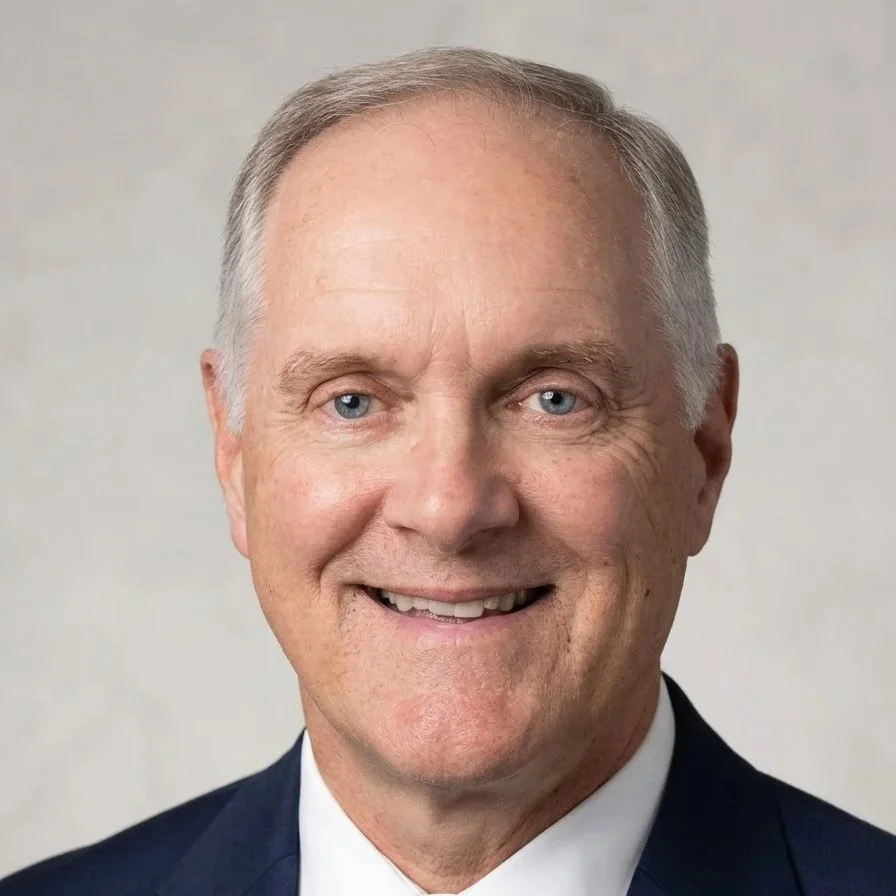
James F. “Jim” Lafferty II
A Certified Public Accountant (CPA), Certified Anti-Money Laundering Specialist (CAMS), and former FBI Supervisory Special Agent, James F. “Jim” Lafferty II works alongside state and local prosecutors to investigate complex official misconduct, public corruption, and financial abuses by government officials.
Jim spent more than two decades in the Federal Bureau of Investigation, serving in the Buffalo and Pittsburgh Field Offices as well as the National Threat Operations Center. Prior to joining the Bureau, he worked in public accounting, giving him a rare ability to pair forensic financial analysis with federal investigative rigor. During his tenure, Jim led the FBI’s Charleston Complex Financial Crimes Task Force—overseeing public corruption, civil rights, and major white-collar investigations across the Southern District of West Virginia—and served as an FBI Evidence Response Team leader.
Jim investigated numerous federal civil rights cases involving state and local law enforcement officers. Jim led investigations that secured a 14-year sentence for an officer who sexually assaulted a 16-year-old girl and a 9-year sentence for an officer who beat a compliant arrestee inside a police station.
Jim also investigated numerous public corruption matters, including campaign finance matters and the “Team Mingo” public corruption investigation in Mingo County, West Virginia, which led to the convictions of a circuit judge, county prosecutor, county commissioner, and chief magistrate, among others. He separately led a federal investigation into misuse of public resources and other misconduct involving members of West Virginia’s highest court that contributed to the convictions of two sitting or former justices.
After the Upper Big Branch mine explosion killed 29 miners, Jim led the federal criminal investigation into Massey Energy and its executives. The investigation resulted in five criminal convictions, and Jim testified as the government’s final witness at former CEO Don Blankenship’s trial. The investigation also produced a $209 million non-prosecution agreement with Alpha Natural Resources, which acquired Massey after the explosion. Jim also led the criminal investigation following the 2014 Freedom Industries chemical spill, which disrupted the water supply for approximately 300,000 West Virginians. Jim has investigated numerous financial crimes, including a workers’ compensation fraud and money-laundering scheme, healthcare fraud, and securities fraud.
Jim has testified at federal criminal trials, before federal grand juries, and in state courts. He has prepared search and seizure warrant affidavits, criminal complaints, and financial analyses for federal prosecutions. His accounting and anti-money laundering training helps him trace complex transactions and explain what bank records, financial statements, and corporate records reveal.
Jim’s work has been recognized with numerous awards, including a Department of Justice Civil Rights Unit Letter of Recognition. The U.S. Attorney’s Office for the Southern District of West Virginia named Jim its 2013 Law Enforcement Officer of the Year. He was also part of the team that received the Environmental Protection Agency’s Gold Medal for Exceptional Service for its work on the Freedom Industries investigation.
Jim earned his B.S. in Business Administration in Accounting, cum laude, from West Virginia University and has maintained an active CPA license since 2000.